Tesla Collision Repair Guide: What to Do After an Accident
By the EV Fix Guide team · · 6 min read
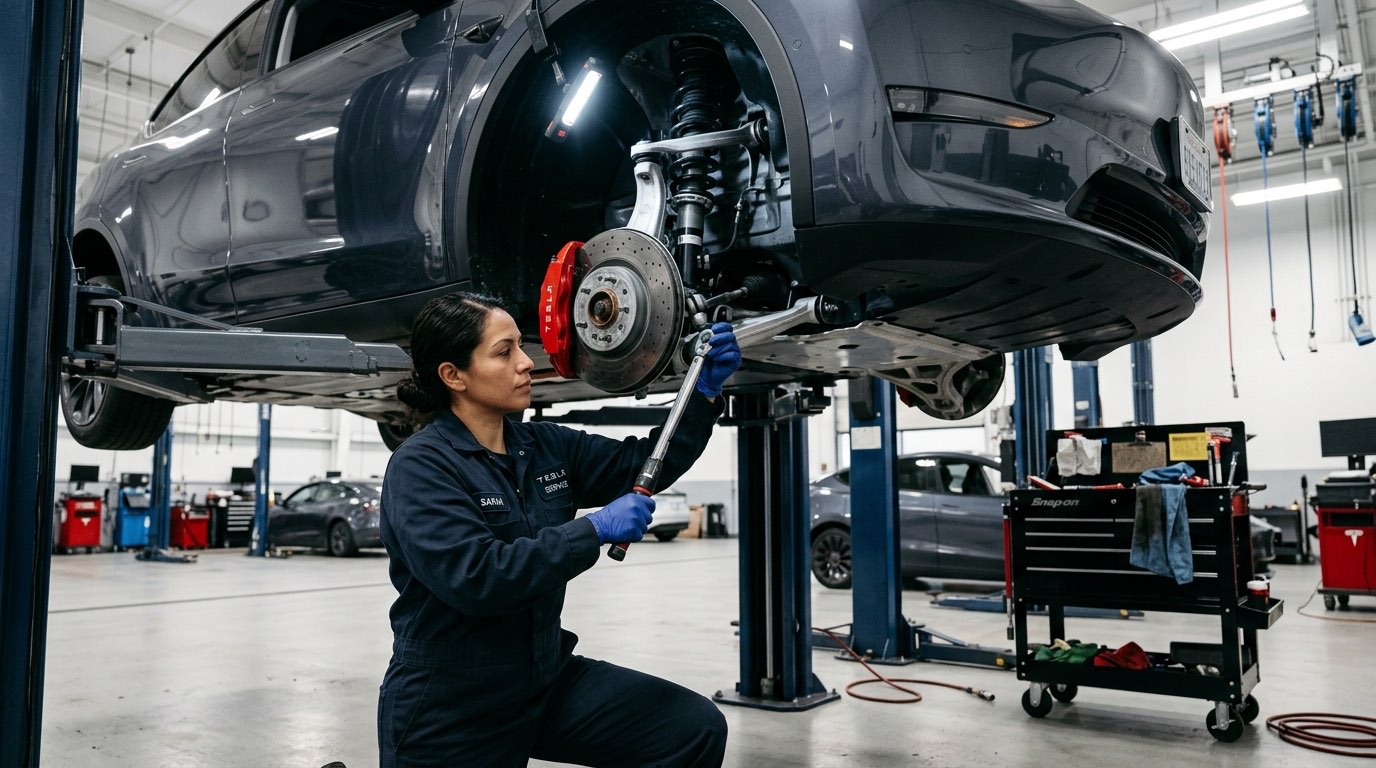
After a Tesla accident, make the scene safe, document the damage, file an insurance claim and take the car to a Tesla Collision Center or a Tesla-approved body shop, because structural, high-voltage and safety repairs on a Tesla require Tesla-certified procedures, parts and camera calibration. Choosing the right shop early is the single biggest factor in how long the repair takes and whether it is done correctly.
This guide covers the first steps at the scene, how Tesla’s collision repair network works, why Tesla body repairs are often expensive and slow, what happens with Autopilot camera calibration, and how insurers decide whether a Tesla is a total loss. Cost figures are hedged estimates: collision repair costs vary enormously with the damage.
In short
- Tesla-approved body shops are independent collision centers that Tesla trains, audits and certifies for its aluminum and structural repair procedures.
- Tesla also runs its own collision centers in some regions and lets owners request collision repair through the Tesla app.
- Structural, high-voltage and safety parts are generally sold only to Tesla-approved shops.
- After bumper, windshield or camera work, Autopilot cameras must recalibrate before Autosteer works again.
- Damage to the high-voltage battery or its mounts often pushes a Tesla toward a total loss.
- Under most US policies you can choose your own repair shop, even if your insurer recommends another one.
What to do immediately after a Tesla accident
- 1Make sure everyone is safe and call emergency services if anyone is hurt. Turn on the hazard lights.
- 2If the car shows a high-voltage warning, smokes, hisses or smells of burning, get everyone away from the car and tell responders it is an electric vehicle.
- 3Put the car in Park. If it is safe, photograph all damage, the scene, the other vehicle, its plate and the other driver’s insurance details.
- 4Save the dashcam footage. If a USB drive is fitted, the car saves clips; our dashcam guide covers USB problems.
- 5Contact Tesla Roadside Assistance through the app or the touchscreen if the car cannot be driven. Ask for a flatbed tow and an EV-aware storage yard.
- 6Report the accident to your insurer and, if required, the police.
Tesla-approved body shops and Tesla Collision Centers
Tesla collision repair is handled by two kinds of shops. Tesla-approved body shops are independent collision centers in Tesla’s Approved Body Shop network: Tesla trains their technicians, audits their facilities and checks their aluminum welding and structural repair capability against its procedures. Tesla also operates its own collision repair centers in some areas and began offering light collision repairs at some service locations in 2021.
You can find approved shops through Tesla’s website or request collision repair in the Tesla app, depending on your market. Approved shops can order structural, high-voltage and safety system parts directly from Tesla; non-approved shops generally cannot. For minor cosmetic damage such as a scuffed bumper cover, a good non-network shop may be fine, but for anything structural, use the network.
Why Tesla collision repairs are expensive and slow
Tesla collision repairs tend to cost more and take longer than comparable gasoline car repairs, for several reasons.
- Materials: Teslas use large aluminum castings and aluminum panels that need specialized tools, welding and training.
- Sensors and cameras: bumpers, fenders and windshields carry ultrasonic sensors (on older cars), radar on some models and cameras that must be refitted and calibrated.
- Limited network: fewer certified shops means longer queues, and parts for low-volume models can take weeks.
- High-voltage safety: any work near the battery requires depowering the car and following Tesla’s high-voltage procedures.
- Whole-assembly replacement: Tesla’s procedures often specify replacing parts rather than repairing them.
Typical Tesla collision repair costs
Collision repair prices depend heavily on the damage, region and parts availability. These are hedged 2026 US ranges based on commonly reported repair bills; your estimate may be lower or much higher.
| Damage | Typical cost range | Notes |
|---|---|---|
| Bumper cover scuffs or scratches | $500–$1,500 | Repair and paint, no sensor work |
| Bumper cover replacement with paint | $1,500–$4,000 | More if sensors, brackets or cameras are damaged |
| Door or fender panel | $1,500–$5,000 | Aluminum panels cost more to repair |
| Rear glass (Model 3 / Model Y) | $950–$1,400 at Tesla | $450–$750 at a glass shop; see the rear glass guide |
| Structural or quarter panel damage | $8,000–$20,000+ | Requires an approved shop and frame measurement |
| Battery or battery mount damage | Often near total loss | Pack replacement costs can exceed the car’s value |
Hedged typical 2026 US estimates. Get a written estimate from an approved shop.
Camera and ADAS calibration after a Tesla collision
After any repair that disturbs a camera, bumper, windshield or mounting bracket, the Tesla’s Autopilot cameras need to recalibrate before Autosteer and other driver assistance features work properly. Tesla cars calibrate their cameras automatically while driving. Tesla’s Owner’s Manual describes clearing the calibration under Controls → Service and then driving on well-marked roads until it completes; until then, alerts such as APP_w207 Autosteer unavailable are normal.
A misaligned bumper or bracket can stop calibration from completing. If Autopilot features stay unavailable for more than a few days of normal driving after a repair, take the car back to the body shop: the camera mounting angle may be off. Persistent camera alerts like APP_w304 after a repair also point to a fitting problem.
Tesla insurance claims: how to handle them
File the claim with your insurer as soon as possible, and tell them which shop you want to use. In most US states you have the right to choose your repair shop, even if the insurer has preferred shops. Ask for the repair to follow Tesla’s published body repair procedures with OEM parts, especially for structural and safety components.
Tesla Insurance is available in a number of US states and routes claims to Tesla’s collision network. With any insurer, expect a supplemental estimate once the car is disassembled: hidden damage behind bumpers and around sensors is common on Teslas. Check whether your policy covers a rental car for the full repair time, because Tesla repairs can take weeks.
When is a Tesla a total loss?
A Tesla is declared a total loss when the estimated repair cost, plus salvage considerations, exceeds a threshold of the car’s actual cash value. Each US state sets its own rule: some use a fixed percentage, commonly somewhere between about 60% and 100% of the car’s value, and others use a total loss formula that compares repair cost plus salvage value with the car’s value.
Damage to the high-voltage battery is the most common reason a repairable-looking Tesla is totaled, because a replacement pack can cost $12,000–$20,000 at Tesla, as our battery replacement cost guide explains. If you disagree with a valuation, provide comparable listings for the same model, year and trim. For buyers, a salvage or rebuilt-title Tesla may have restrictions on Supercharging, connectivity or warranty, so check carefully; our used Tesla checklist helps.
Frequently asked questions
Do I have to take my Tesla to a Tesla-approved body shop?
No, but it is strongly recommended for anything beyond cosmetic damage. Tesla-approved body shops are trained and audited on Tesla’s aluminum and structural repair procedures and can order structural, high-voltage and safety parts directly from Tesla. Under most US policies you can choose any shop, but a non-approved shop may not be able to source the right parts or calibrate the car correctly.
Why does Tesla collision repair take so long?
Tesla collision repairs often take weeks because the approved shop network is smaller than for mainstream brands, some parts are back-ordered, and repairs involve aluminum structures, high-voltage safety procedures and camera calibration. Hidden damage found during disassembly also adds supplemental estimates and approvals from the insurer.
Does a Tesla need camera calibration after an accident?
Yes, if the repair disturbed a camera, windshield, bumper or mounting bracket. Tesla cameras recalibrate automatically while you drive, which can take a number of miles on well-marked roads. Until calibration completes, Autosteer and some Autopilot features are unavailable. If they stay unavailable after several days of driving, the camera mounting may need checking by the shop.
Will my insurance total my Tesla?
It depends on the repair estimate compared with the car’s value and your state’s total loss rule. Minor and moderate damage is usually repaired. Damage to the high-voltage battery, its mounting or major structural castings often makes a Tesla a total loss, because a new pack alone can cost $12,000 or more out of warranty.
Full repair guide and cost table
Step-by-step fix, tools and Tesla vs. independent shop vs. DIY prices: Tesla APP_w207 / APP_w222: Autosteer Unavailable Fix.
Tesla Service $0 (Temporary) / $100 - $300 (Camera inspection or calibration) · independent shop $80 - $250 (Bumper realignment or calibration) · DIY $0
Tesla Model 3 fixes & recalls, by email
One email a month. New fixes, recalls, real prices. Free.
More owner repair stories
- Tesla Service Mode: How to Open It and What to RunThe hidden diagnostics menu every Tesla has, and the four tests worth running.
- How to Reset a Tesla: Soft Reset, Power Off and 12V RebootThree resets, from 15 seconds to 10 minutes. Start with the lightest one.
- Tesla DIY Tool Kit: What You Need (and What Not to Touch)Torx set, jack pads, trim tools. And the jobs you should never do at home.
- Does an Independent Shop Void Your Tesla Warranty?Short answer: no. Here is what the law says and where the limits are.
This guide is for information only. High-voltage components (orange cables) can be lethal — leave them to trained technicians. Not affiliated with Tesla, Inc.