How Long Do Tesla Brake Pads Last? Wear, Rust and Costs
By the EV Fix Guide team · · 6 min read
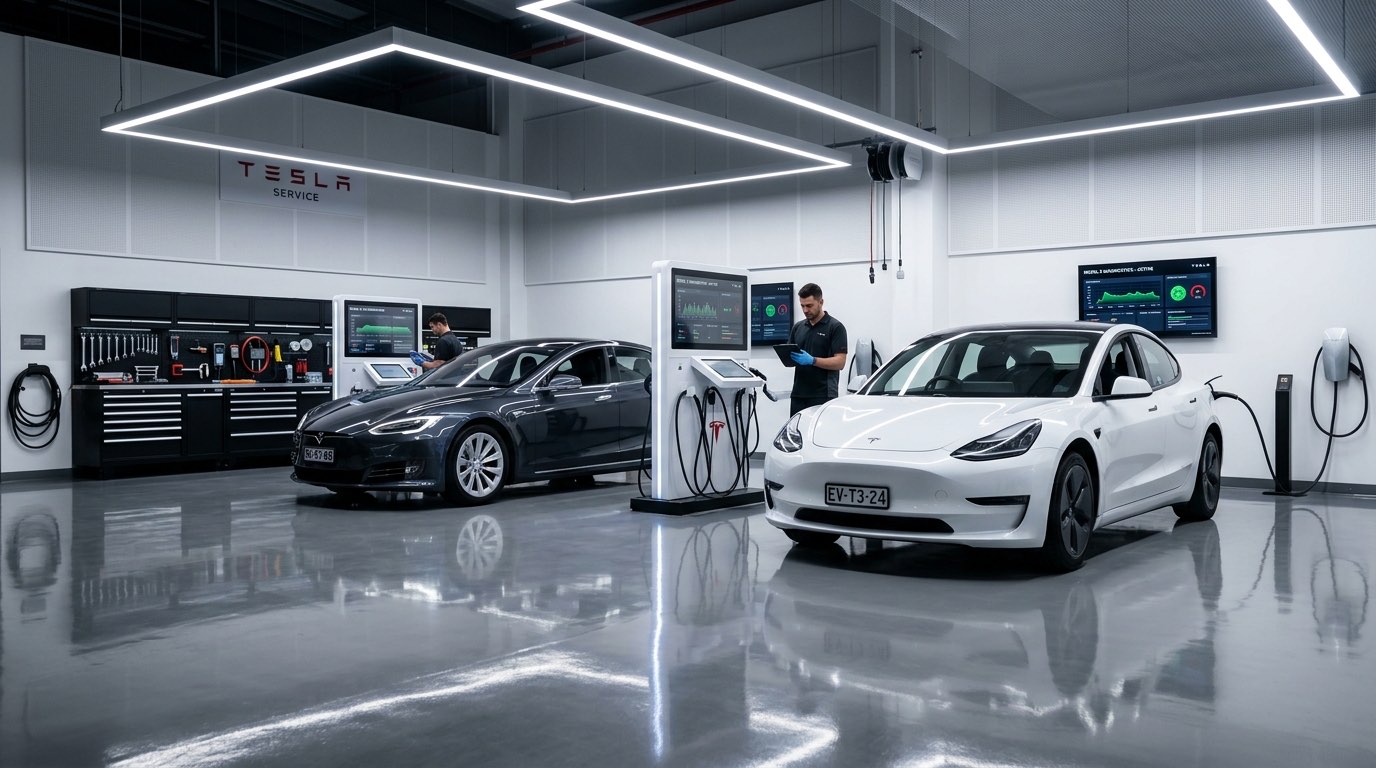
Tesla brake pads often last 100,000 miles or more, and many owners never replace the original pads, because regenerative braking does most of the slowing and the friction brakes are used far less than in a gas car. The real brake problems on a Tesla are usually rust, corrosion and seized caliper slides from lack of use, not worn pads.
This guide explains why regen extends pad life, the signs that pads or rotors need attention, how to deal with rotor rust, why Tesla recommends caliper cleaning and lubrication in salted regions, how often to check brake fluid, and what brake service typically costs in 2026.
In short
- Many Tesla owners report original brake pads lasting well past 100,000 miles because of regenerative braking.
- Tesla’s maintenance schedule recommends cleaning and lubricating brake calipers every year or 12,500 miles in regions where roads are salted in winter.
- Light surface rust on rotors is normal; heavy, grooved or uneven rust needs firm braking or service.
- Tesla’s schedule calls for a brake fluid health check, typically every 4 years on current models; check your Owner’s Manual.
- ESP_a118 can appear when the car detects low brake performance and adds assist; it is a reason to inspect the brakes.
How long do Tesla brake pads last?
Tesla brake pads commonly last 100,000–150,000 miles or longer, according to the range owners and independent shops report, and some high-mileage Model S and Model 3 vehicles are still on their original pads. Tesla does not publish a fixed pad replacement interval; pads are replaced on condition.
The reason is regenerative braking. When you lift off the accelerator, the motor works as a generator, slows the car and sends energy back to the battery. In normal driving with one-pedal driving enabled, the friction brakes only engage for hard stops, low-speed holds and when regen is limited, such as when the battery is full or very cold.
| Driving pattern | Typical pad life (hedged) | Main risk |
|---|---|---|
| Mostly highway, regen on | 120,000+ miles | Rust and seized slides from disuse |
| Mixed city and highway | 80,000–150,000 miles | Uneven wear if slides stick |
| Heavy city, aggressive braking | 50,000–80,000 miles | Normal pad wear |
| Track use or towing (Model X, Cybertruck) | Much shorter, varies | Heat, glazing, fluid boiling |
Owner-reported ranges for Tesla brake pad life; inspection, not mileage, decides replacement.
Signs your Tesla brake pads or rotors need attention
- Grinding or scraping when braking, which can mean pads are worn to the backing plate or a rotor is heavily corroded.
- A squeal that persists after the first few stops of the day (light morning squeal from moisture is normal).
- Pulsing in the brake pedal or a steering wheel shake only when braking, which points to uneven rotor deposits or corrosion.
- Uneven pad wear between the inner and outer pad, a classic sign of a sticking caliper slide pin.
- A pad thickness of 3 mm or less on inspection, a common replacement threshold.
- The alert ESP_a118 “Assist for low brake performance activated”; see ESP_a118.
Why Tesla rotors rust, and what to do
Tesla rotors rust because they are used so lightly. A gas car’s pads scrub the rotor clean on every stop; on a Tesla, the rotor may sit with a layer of surface rust for weeks. Light orange rust after rain or a car wash is normal and wipes off in the first few stops.
Deeper rust that leaves a rough band on the rotor face, or pitting near the inner edge, reduces braking performance and causes noise. A few firm stops from about 40–50 mph in a safe, empty place every few weeks keeps the rotor faces clean. Some owners also turn regen to a lower setting occasionally to use the friction brakes more. If the rust is already deep, rotors may need resurfacing or replacement. Our rotor rust and caliper guide explains the process.
Brake caliper cleaning and lubrication
Caliper cleaning and lubrication is the most important brake service on a Tesla. Tesla’s maintenance schedule recommends cleaning and lubricating all brake calipers every 12 months or 12,500 miles (20,000 km) for vehicles in areas that use road salt in winter.
The service involves removing the pads, cleaning corrosion from the pad abutments and caliper brackets, lubricating the slide pins with high-temperature brake grease and reinstalling. It prevents seized slides, uneven pad wear and noise. A confident DIYer with jack pads, a torque wrench and brake cleaner can do it; see our DIY tool kit.
- 1Lift the car on the correct jack points with jack pads, never on the battery pack.
- 2Remove the wheel, then the caliper and pads as per the service manual.
- 3Clean the abutment clips and bracket with a wire brush and brake cleaner.
- 4Lubricate the slide pins and pad contact points with high-temperature brake grease, keeping grease off the pad friction surface and rotor.
- 5Reassemble and torque all bolts to spec, then bed the pads with several moderate stops.
Tesla brake fluid: how often to check it
Brake fluid absorbs moisture over time, which lowers its boiling point and can corrode internal parts. Tesla’s current maintenance schedule calls for a brake fluid health check and replacement if needed, typically every 4 years on Model 3 and Model Y; older schedules for some models used a 2-year interval, so check the Owner’s Manual for your car.
A test strip or electronic tester reads moisture content in a minute. A flush typically costs $80–$150 at an independent shop and $100–$250 at Tesla, per our brake fluid guide.
Tesla brake service costs in 2026
These are typical 2026 US prices. Tesla service centers, independent shops and mobile mechanics vary widely, and Model S, Model X and Cybertruck parts cost more.
| Service | Tesla service center | Independent shop | DIY parts |
|---|---|---|---|
| Caliper clean and lube (all four) | $150–$350 | $100–$250 | $15–$40 |
| Brake fluid test and flush | $100–$250 | $80–$150 | $15–$40 |
| Front pads (axle) | $250–$450 | $180–$350 | $60–$150 |
| Pads and rotors (axle) | $500–$900 | $350–$700 | $150–$350 |
| Brake inspection after ESP_a118 | $0–$300 | $150–$600 incl. service | $30–$250 |
Estimated 2026 US brake service costs for Tesla vehicles; quotes vary by region and model.
Keeping Tesla brakes healthy
- Make a few firm stops every couple of weeks to clean rotor faces.
- Have calipers cleaned and lubricated yearly in salted regions.
- Check brake fluid on Tesla’s schedule.
- Inspect pads at every tire rotation, since the wheels are already off; see our tire guide.
- Keep receipts; independent brake service does not void your warranty, see warranty and independent repair.
- Need a shop? Find an independent EV shop.
Frequently asked questions
How long do Tesla brake pads last?
Tesla brake pads commonly last 100,000 miles or more, and many owners never replace the original set. Regenerative braking handles most deceleration, so the friction pads wear slowly. Aggressive city driving, towing or track use shortens pad life. Tesla does not set a mileage interval; pads are replaced when inspection shows about 3 mm or less of material.
Why are my Tesla rotors rusty?
Tesla rotors rust because regenerative braking means the friction brakes are used rarely, so the pads do not scrub moisture and corrosion off the rotor. Light surface rust after rain is normal. Heavy rust bands or pitting need firm braking to clean them, or rotor resurfacing or replacement, plus caliper cleaning and lubrication to stop it returning.
How often should Tesla brake calipers be serviced?
Tesla’s maintenance schedule recommends cleaning and lubricating the brake calipers every 12 months or 12,500 miles (20,000 km) in regions where roads are salted in winter. In dry, salt-free climates, inspect them at tire rotations instead. The service prevents seized slide pins, uneven pad wear and brake noise.
Does a Tesla need brake fluid changes?
Yes. Brake fluid absorbs moisture over time, which lowers its boiling point. Tesla’s maintenance schedule calls for a brake fluid health check, typically every 4 years on current Model 3 and Model Y, with replacement if the test fails. Older schedules for some models used 2 years, so check your Owner’s Manual.
Can I replace Tesla brake pads myself?
A confident DIYer with jack pads, a torque wrench and the right sockets can replace Tesla brake pads. The rear calipers on Model 3 and Model Y include an electric parking brake, so you must put the car into its brake service mode before pushing back the rear pistons. If you are unsure, an independent shop is usually cheaper than a service center.
Full repair guide and cost table
Step-by-step fix, tools and Tesla vs. independent shop vs. DIY prices: Tesla Brake Caliper Service & Rotor Rust: Cost & DIY.
Tesla Service $150 - $350 · independent shop $100 - $250 · DIY $15 - $40 (Brake cleaner, high-temperature brake grease)
Tesla Model 3 fixes & recalls, by email
One email a month. New fixes, recalls, real prices. Free.
More owner repair stories
- Tesla Service Mode: How to Open It and What to RunThe hidden diagnostics menu every Tesla has, and the four tests worth running.
- How to Reset a Tesla: Soft Reset, Power Off and 12V RebootThree resets, from 15 seconds to 10 minutes. Start with the lightest one.
- Tesla DIY Tool Kit: What You Need (and What Not to Touch)Torx set, jack pads, trim tools. And the jobs you should never do at home.
- Does an Independent Shop Void Your Tesla Warranty?Short answer: no. Here is what the law says and where the limits are.
This guide is for information only. High-voltage components (orange cables) can be lethal — leave them to trained technicians. Not affiliated with Tesla, Inc.